Zero-tariff policy boosts China-Africa modernization drive

Amid rising volatility and growing protectionism in global trade, China's zero-tariff policy underscores its firm commitment to fostering an open world economy, advancing shared development across the Global South through practical cooperation, and injecting stability into the global trade system and economic growth.
NAIROBI, May 2 (Xinhua) -- Starting Friday, China fully implemented a zero-tariff policy for 53 African countries with which it has diplomatic relations, as announced by Chinese President Xi Jinping in a congratulatory message to the 39th African Union Summit on Feb. 14.
As a hallmark of China-Africa cooperation in the new era, the zero-tariff measure is expected to reduce trade barriers and deliver long-term benefits to people on both sides, injecting fresh momentum into their joint pursuit of modernization while contributing to a more inclusive and universally beneficial global trading system.
A RELIABLE MARKET
On the outskirts of the Ethiopian capital city of Addis Ababa, construction is underway on a new roasting facility for Awo Coffee to meet soaring export orders. According to Awo Coffee General Manager Tesfaye Gebru, about 90 percent of the firm's roasted products are shipped to China each year.
"Since we began in 2014, the fast-growing Chinese coffee market has emerged as our primary export destination," said Gebru, noting that in 2024, the company exported about 140 tonnes of Ethiopian green coffee beans and 20 tonnes of processed coffee products to China, with annual growth of around 10 percent.
Awo Coffee sources beans from its own 14-hectare farm. "We purchase beans from smallholder farmers at higher prices, directly boosting their incomes. During harvest seasons, we also hire local villagers to pick coffee cherries," said Gebru.
Awo's rapid expansion has been supported by early access to China's zero-tariff policy. Effective from December 2024, China granted all least developed countries with which it has diplomatic relations zero-tariff treatment for 100 percent tariff lines, including 33 African countries.
The impact on Ethiopian coffee exporters has been swift. Ethiopia, widely known as the home of Arabica coffee, has strengthened its position in the Chinese market, rising to become one of the largest suppliers of coffee to China in recent years.
As China's zero-tariff policy now extends to 53 African countries, Cameroon cocoa farmer George Wambo Cornyu described it as "a golden opportunity."
"It's going to encourage our domestic processing and also value additions," said Cornyu, also president of Masoka-Ikata Farmers Cooperative in Cameroon. "It is going to trigger industrialization in our own sector."
Beyond tariff reductions, China has in recent years expanded market access for African exports through upgraded "green channels" and other facilitation initiatives. It has also supported African participation in major trade expos such as the China International Import Expo, helping African products reach global markets.
In 2025, China-Africa trade grew by 17.7 percent year on year to reach 348 billion U.S. dollars, while Africa's exports to China exceeded 123 billion dollars, reflecting deepening economic and trade ties.
James Kandoya, a senior economic journalist at Tanzania's The Guardian Newspaper, noted that for a long time, many African products struggled to enter major global markets due to high tariffs, strict standards, or complicated procedures.
"When China opens its market to African exports with zero tariffs, it immediately creates real opportunities. It gives African businesses the feeling that there is a reliable market willing to engage with us on fairer terms. That can encourage more investment in agriculture, processing, and logistics," he said.
A DRIVER OF AFRICAN MODERNIZATION
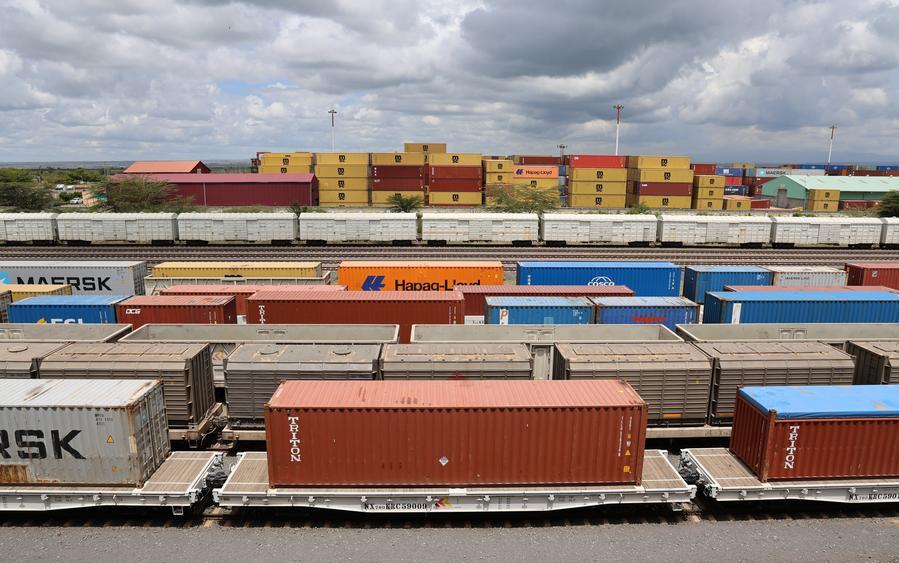
In March, the first cargo train carrying 54 containers of locally produced goods exported to China under zero-tariff treatment departed from Nairobi, Kenya's capital. It traveled along the Chinese-built Mombasa-Nairobi Standard Gauge Railway to the port city of Mombasa before continuing by sea to China.
Among the shipments was a batch of avocado oil produced at a processing plant in the Athi River Export Processing Zone on the outskirts of Nairobi, invested in by the Chinese company Sanmark Limited.
Since beginning operation in August 2025, the processing plant has exported about 410 tonnes of avocado oil to China, where the product has evolved from a niche health item to a regular feature on major e-commerce platforms.
With China's zero-tariff policy taking effect in May, Kenya's avocado industry players expect further export growth.
"We look forward to exporting more avocado oil and boosting incomes for local farmers," said Muhammad Khan, operations manager at Sanmark Limited. "I also believe more Chinese investors will be encouraged to enter the Kenyan market and set up processing factories, enhancing the efficiency and resilience of the industrial chain."
In 2022, fresh Kenyan avocados embarked on their journey to China. Since then, Chinese and Kenyan companies have launched full value-chain cooperation spanning avocado cultivation, processing, cross-border logistics, and end-market distribution, significantly boosting the sector's overall development.
Describing the zero-tariff initiative as "an unprecedented breakthrough in the export journey," Lee Kinyanjui, cabinet secretary in the Ministry of Investments, Trade and Industry, said: "This is more than a policy shift; it is a game changer that opens the door to one of the world's largest consumer markets and positions Kenya for a new era of trade growth and value addition."
"Over the past two decades, the (China-Africa cooperation) framework has steadily shifted toward trade, industrialization support, and infrastructure development. Duty-free access complements infrastructure corridors, logistics projects, and industrial parks already developed through China-Africa cooperation," Zimbabwean economic analyst and political commentator Dereck Goto said.
Sharing a similar view, Balew Demissie, a senior communication and publication consultant at the Policy Studies Institute of Ethiopia, said as a combined measure of trade and investment, "the zero-tariff policy closely aligns with Africa's urgent industrialization agenda."
"It could complement domestic industrial policies by creating new opportunities for manufacturing expansion, agro-processing, and export-oriented industrialization, thereby injecting fresh momentum into Africa's modernization trajectory," he added.
"This is an approach where China is trying to re-establish supply chains that are more predictable, that are more stable in this erratic world," said Tabani Moyo, research fellow with the Graduate School of Business and Leadership at the University of KwaZulu-Natal, South Africa. "Hence, (there is) a need for the multiple industries in Africa to chip in and drive the modernization agenda through value-addition of their commodities."
A TIMELY STABILIZER
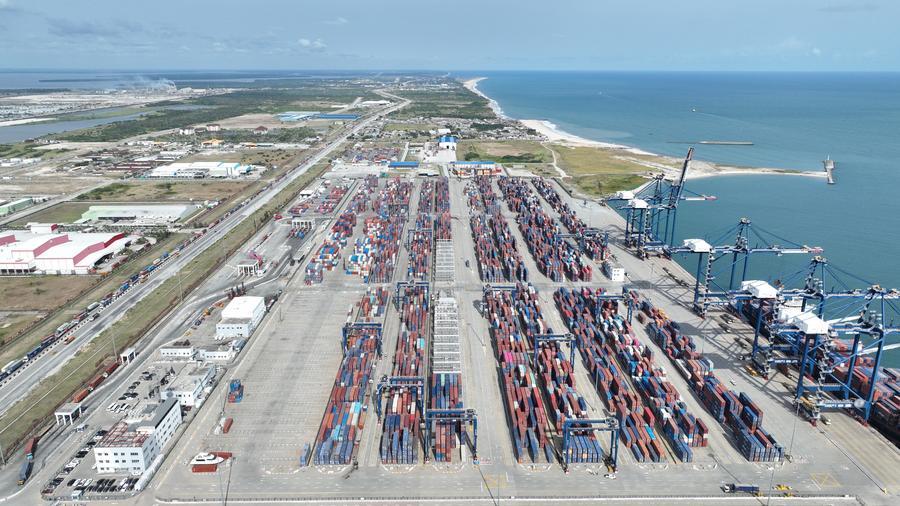
Amid rising volatility and growing protectionism in global trade, China's zero-tariff policy underscores its firm commitment to fostering an open world economy, advancing shared development across the Global South through practical cooperation, and injecting stability into the global trade system and economic growth.
During the 39th African Union Summit, United Nations Secretary-General Antonio Guterres welcomed the move, appealing to all developed countries and nations with large economic potential to take the same measure.
African Union Commission Chairperson Mahmoud Ali Youssouf said that China's initiative is particularly vital as Africa bears the brunt of global uncertainties, which have disastrous effects on African economies, particularly those with structural vulnerabilities.
"We also see isolationist policies across the world, while protectionism is growing," he said, noting that China's zero-tariff treatment is a "very timely" move that will help Africa tackle global challenges.
"Amid unilateralism and protectionism, China's zero-tariff treatment enhances trade resilience, supports diversification of African exports, and sustains development prospects by shielding them from external shocks," said Leseko Makhetha, head of the Department of Economics at the National University of Lesotho.
"It reinforces a rules-based global trading system, offering an alternative to protectionism and helping stabilize trade flows amid global tensions," Makhetha noted.
(Video reporters: Zeng Tao, James; Video editors: Liang Wanshan, Roger Lott, Luo Hui)■










Comments