Interview: UAE's exit from OPEC underscores broader transition toward greater economic, strategic autonomy -- Kuwaiti analyst

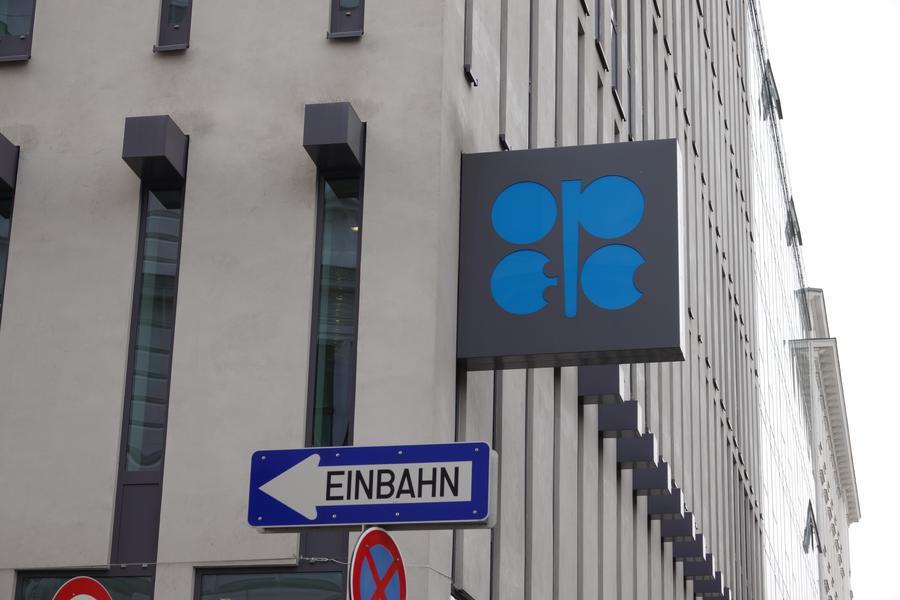
KUWAIT CITY, May 2 (Xinhua) -- The withdrawal of the United Arab Emirates (UAE) from the Organization of the Petroleum Exporting Countries (OPEC) signals a broader transition toward greater economic and strategic autonomy, a Kuwaiti political analyst told Xinhua in a recent interview.
According to the UAE's government, the country's decision to leave OPEC and the wider OPEC+ alliance took effect on Friday.
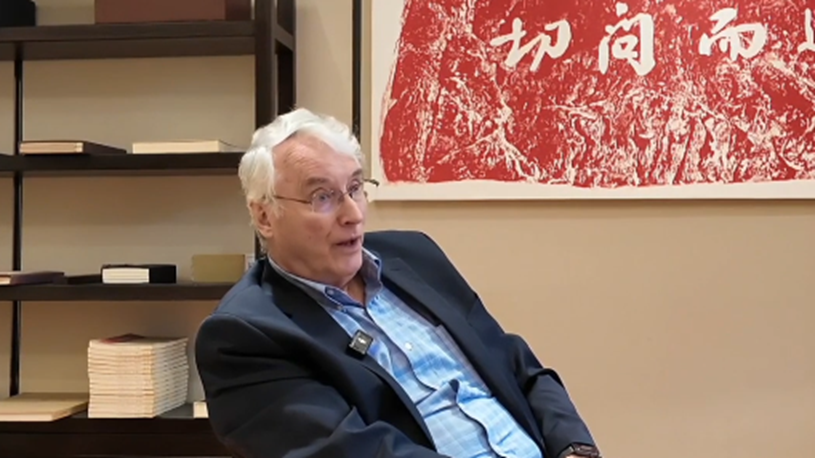
Discussing the factors behind the UAE's decision, Charbel Barakat, head of international news department at Kuwait's Al-Jarida newspaper, said, "There is a structural contradiction between the UAE's expanding global energy strategy and the constraints imposed by OPEC."
Since its founding in 1960, OPEC, which now accounts for roughly 40 percent of the world's oil supply, has sought to stabilize global oil prices, and ensure steady revenues for its member countries by regulating their oil output.
This approach of managing prices by limiting production has raised concerns among some of its members eager to strengthen their economies by expanding oil exports.
"The UAE has significantly broadened its external energy investments, opened its domestic sector to foreign participation, and accelerated its diversification into clean and non-oil energy. This trajectory increasingly clashes with a framework designed to collectively manage supply for price stability," Barakat noted.
"The result is a widening gap between OPEC's logic of coordinated restraint and the strategic calculus of investor states seeking to maximize returns and market share," he added.
Another driver of the withdrawal is strategic, according to the analyst. The UAE is redefining its position as a global energy actor and a central hub for trade, finance, and logistics, while positioning itself as a multi-aligned partner in global energy security. This reflects a deliberate shift away from being anchored solely within "the Saudi-Russian dynamics" of OPEC and OPEC+, or confined to closed regional alignments.
"Taken together, these developments suggest that the UAE's exit from OPEC and OPEC+ is not an isolated decision, but rather the logical extension of a broader transition toward greater economic and strategic autonomy," Barakat pointed out.
Commenting on the impact of the UAE's exit, the Kuwaiti expert said, "The most immediate effect of the UAE's exit is a reduced capacity for OPEC to manage supply collectively."
"This could translate into greater global production flexibility and intensified competition between traditional producers and those operating outside the alliance's institutional framework," he said.
One of the most far-reaching effects, Barakat believes, is that the UAE's move could set an example for other members, potentially prompting them to follow suit.
"If other producers follow a similar path over the medium term, the model of collective supply management may become increasingly fragile and more susceptible to gradual erosion," he noted.
As cohesion within the cartel weakens, "importers gain broader options for sourcing, enhanced leverage in negotiating long-term contracts, and greater flexibility in diversifying supply chains, and reducing reliance on traditional supply configurations," opined Barakat.■











Comments